MigrantIQ

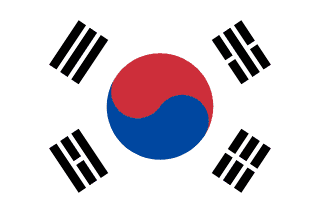
South Korea flagMoving to South Korea

South Korea flag

Located on a peninsula squarely between China and Japan, Korea is a mountainous and ruggedly beautiful land of diverse geographical features. Seas form three of its boundaries: to the east is

Publisher: MigrantIQ Editorial3 min readData confidence: 82/100Last updated 2026-05-17

16 published visa guides · 16 editorially reviewed in Q2 2026

Capital

Seoul; note - Sejong, located some 120 km (75 mi) south of Seoul, serves as an administrative capital for segments of the South Korean Government

Region

Asia (Eastern Asia)

Currency

KRW

Cost of Living Index

61.6

Net Monthly Salary

6467

Healthcare

Universal/Insurance

Safety Index

N/A

Rent Index

16.1

Quality Index

7.4

Country Profile

In-depth facts & data for South Korea· Updated 2026-06-02

8 topics

Located on a peninsula squarely between China and Japan, Korea is a mountainous and ruggedly beautiful land of diverse geographical features. Seas form three of its boundaries: to the east is the Sea of Japan (or East Sea); to the south, the narrow Korean Straits, and to the west, the Yellow Sea. The Demilitarized Zone…

For planning only. Always verify immigration and legal rules on official government sites.

Official Languages

Korean is spoken in both North and South Korea and is written in a phonetic alphabet created and promulgated in the mid-15th century. While the alphabet is called Hangul in South Koreait is known as Chosongul in North Korea. Although the Korean language is replete with words adapted from Chinesethe North Koreansunlike the South Koreansdo not use Chinese characters with Chosongul in their newspapers and publications. They prefer to use only Chosongulwhich is sufficient for most needs. There are also some differences in vocabulary between the North and the Southinfluenced somewhat by politics and also by the contact each country has had with other nations. RussianChineseand English are taught as second languages in the schools.

Official Links

Newcomer Checklist

  • - Confirm visa status and entry conditions before booking travel
  • - Prepare temporary housing and proof of address where required
  • - Set up local phone, banking, tax, and health coverage steps
  • - Save emergency numbers, official portals, and scam-reporting channels

Local Services & Setup

Banking: Confirm newcomer-friendly banks locally.

Fintech: Confirm available local payment apps.

Healthcare access: Full

Health waiting period: 0 day(s)

Emergency & Safety

Save local emergency, police, medical, embassy, and fraud-reporting contacts after arrival. Check official government portals before relying on third-party lists.

Crime index: N/A · Safety index: N/A

Settlement Funds & Financial Notes

Settlement funds: No general savings requirement for work visas (E-7, E-2). D-8 investment visa requires USD 100,000+ investment. Workation visa requires income proof only.

Korean income tax is progressive: 6% (up to KRW 14M), 15% (KRW 14-50M), 24% (KRW 50-88M), 35% (KRW 88-150M), 38% (KRW 150-300M), 40% above. A 10% local income tax surtax applies on top of national tax. National Health Insurance: approximately 7% of salary (split employer/employee). National Pension: approximately 9% of salary (split). Effective take-home for a KRW 50M/year earner (~€33,000) is approximately 70-75% of gross. Korea has tax treaties with most OECD countries. Foreign residents are taxed on Korean-source income in the first year and on worldwide income after 5 years of residence.

City-Level Cost Snapshot

CitySingle monthlyFamily monthly1BR center
Busan€1,450€2,600€650
Incheon€1,600€2,800€700
Seoul€2,000€3,400€1,100

Who Qualifies Best

  • HealthcareHard

    Best visa: E-7 (specific medical occupations) with recognized credentials

  • InvestorsModerate

    Best visa: D-8 Corporate Investment Visa

  • Remote WorkersHard

    Best visa: C-38 Workation Visa (if earning USD 84,600+/year)

  • RetireesHard

    Best visa: F-1 Dependent Visa (if family connection) or tourist stays (no dedicated retirement visa)

  • Skilled TradesHard

    Best visa: E-7 (specific technical occupations) or E-9 (non-professional employment, limited countries)

  • Tech WorkersModerate

    Best visa: E-7 (employer-sponsored) or C-38 Workation (remote, if income qualifies)

Official vs Reality

Cost of Housing in Seoul

Official: Korea has a range of housing options

Reality: Seoul's Gangnam district and other premium areas are extremely expensive — comparable to London or Paris per square metre. The jeonse system (deposit-based rental) is unique to Korea and requires depositing typically 50-80% of property value as a lump sum to live rent-free for 2 years. Wolse (monthly rent) rates have been rising. Older buildings (villas, officetels) are more affordable but have smaller, darker units. Many foreign workers live in officetels (studio-style units with basic kitchen) near their workplace.

Digital Nomad Visa Accessibility

Official: South Korea launched a digital nomad visa in 2024

Reality: The C-38 Workation Visa's income threshold of USD 84,600/year (~€78,000) means the vast majority of digital nomads cannot qualify. This is roughly 3x the median Korean salary and excludes most freelancers and early-career remote workers. Korea is an incredible place to live but is not a budget digital nomad destination — it is designed for high-earners only.

E-7 Quota System

Official: Employers can hire qualified foreign workers in designated occupations

Reality: The quota system creates bottlenecks. Each employer must first apply for a quota from the Ministry of Justice — this step alone takes 2-4 weeks and can be refused if the employer cannot demonstrate need. Small and medium companies may struggle with the paperwork. Large Korean conglomerates (Samsung, LG, Hyundai, Naver, Kakao) are the most structured E-7 sponsors. Finding an employer willing and able to sponsor an E-7 is often the real barrier.

Korean Language Barrier

Official: No Korean language requirement for most work visas

Reality: While technically true for initial work visas, the practical reality is that most Korean workplaces operate entirely in Korean — from email to meetings to company culture. Tech companies with international teams (Kakao, Naver, gaming companies) and MNC Korean offices are the exceptions. Without Korean, your career progression at a Korean company is heavily limited. For the F-2-7 points pathway, TOPIK 4+ significantly boosts your score and dramatically improves your integration experience.

Sources & References

Country data is a planning aid. Official government sources override MigrantIQ summaries for immigration, legal, tax, health, and emergency rules.

  • MigrantIQ country profile

    Summary profile maintained for planning. Last updated 2026-05-07.

  • World Bank and public data sources

    Used for economic and country-level indicators where available.

  • Numbeo and public cost datasets

    Used for cost-of-living signals for South Korea where available.

Feedback

Was this guide helpful?

Your answer helps us improve guides and update priority.

Summarize this page with AI

Opens your assistant with a pre-filled prompt (ChatGPT, Perplexity, Claude). Gemini uses Google AI Mode.

Not affiliated with any AI platform. Always verify immigration rules on official government sites.

Frequently Asked Questions

Verify your visa pathway, legal rights and duties, expected monthly costs, and safe housing setup before travel.

Use the scam alerts section for active patterns and red flags, then confirm every paid service through official channels.

Start with visa eligibility, then create a realistic budget and shortlist temporary housing. Banking setup usually follows legal arrival steps.

Related South Korea Guides

Share MigrantIQ

Help others find free migration guides, Q&A, checklists, and scam alerts.

Plan smarter

Save countries, compare destinations, track visa checklists, and sync your migration plan across devices.