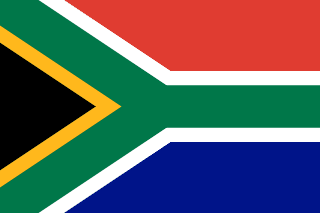
Moving to South Africa can be a good fit for families and individuals seeking new experiences, whether for work, study, family reunification, or temporary visits. With its mixed culture, stunning landscapes, and long history, South Africa has a distinct setup for newcomers. However, it's essential to approach your relocation with a clear understanding of the visa requirements and living conditions. The first 90 days after your arrival will be important for settling in, establishing routines, and ensuring compliance with local laws and regulations.\n\nFamilies planning to relocate should consider the various visa options available, including work visas for skilled professionals, family visas for reunification, and investor visas for those looking to start businesses. It's vital to confirm your visa status and entry conditions before booking travel to avoid any complications. This guide aims to provide practical insights for a easier move to life in South Africa, helping you navigate the initial stages of your relocation journey.
Pretoria (administrative capital); Cape Town (legislative capital); Bloemfontein (judicial capital)
Region
Africa (Southern Africa)
Currency
ZAR
Cost of Living Index
37.1
Net Monthly Salary
6334
Healthcare
Universal/Two-Tier
Safety Index
N/A
Rent Index
13.0
Quality Index
7.2
The cost of living in South Africa is relatively affordable, with a cost of living index of 37.1, indicating that expenses are lower compared to many other countries. Rent is particularly economical, with a rent index of 13, making it feasible for newcomers to find suitable accommodation. The typical net monthly salary is around 6,334 ZAR, which can help gauge the financial landscape. However, costs can vary significantly by city and region, so it's advisable to research specific areas to get a clearer picture of living expenses.
Country Profile
In-depth facts & data for South Africa· Updated 2026-06-02
8 topics
South Africa lies at the southern tip of the African continent. South Africa has a narrow coastal zone and an extensive interior plateau with altitudes ranging from 3,000 to 6,000 feet above sea level. Lacking arterial rivers or lakes of significance, extensive water conservation and controls are necessary. South Afric…
isiZulu or Zulu (official) 25.3%isiXhosa or Xhosa (official) 14.8%Afrikaans (official) 12.2%Sepedi or Pedi (official) 10.1%Setswana or Tswana (official) 9.1%English (official) 8.1%Sesotho or Sotho (official) 7.9%Xitsonga or Tsonga (official) 3.6%siSwati or Swati (official) 2.8%Tshivenda or Venda (official) 2.5%isiNdebele or Ndebele (official) 1.6%other (includes South African sign language (official) and Khoi or Khoisan or Khoe languages) 2%note - data represent language spoken most often at home
Official immigration portal for visas, entry rules, and residency steps.
The official portal of the Department of Home Affairs is important for accessing accurate information regarding visas and immigration processes. Be cautious of lookalike sites that may charge fees for forms that are available for free.
Newcomer Checklist
- Prepare temporary housing and proof of address where required
- Set up local phone, banking, tax, and health coverage steps
- Save emergency numbers, official portals, and scam-reporting channels
- Research local neighborhoods and amenities for your first days
- Learn about public transportation options in your area
- Join local expat or community groups for support and networking
- Learn basic phrases in one of the local languages to ease communication
Local Services & Setup
Healthcare access: Limited
Health waiting period: 90 day(s)
Settlement Funds & Financial Notes
Settlement funds: No formal savings requirement for work visas. Business Visa requires ZAR 5,000,000 (EUR 250,000) investment. Retired Persons Visa requires ZAR 37,000/month (EUR 1,850) income.
South Africa offers exceptional value for those earning in EUR, USD, or GBP. The Rand has been weak, giving foreign-currency earners significant purchasing power. Essential additional costs that are atypical elsewhere: private security (ZAR 500-1,500/month), medical aid (ZAR 2,000-8,000/month), generator/solar backup (one-time ZAR 80,000-200,000), and private schooling if applicable (ZAR 40,000-250,000/year). These costs are standard for middle-class South African living and should be budgeted. Domestic help (cleaning, gardening, childcare) is very affordable: ZAR 50-100/hour (EUR 2.50-5).
When settling in South Africa, it's essential to establish a local bank account to manage your finances effectively. Proof of funds may be required for certain visa applications and banking setups, so be prepared to present necessary documentation. understanding the healthcare system is important, as access may be limited for immigrants. Consider obtaining health coverage that suits your needs during your initial period in the country.
City-Level Cost Snapshot
City
Single monthly
Family monthly
1BR center
Durban
€850
€2,100
€400
Johannesburg
€1,050
€2,500
€500
Cape Town
€1,200
€2,800
€650
Who Qualifies Best
Healthcare WorkersEasy
Best visa: Critical Skills Work Visa — healthcare professionals are in acute demand
InvestorsModerate
Best visa: Business Visa — ZAR 5,000,000 (EUR 250,000) minimum investment with job creation requirement
Remote WorkersModerate
Best visa: No dedicated visa — tourist visa (90 days) or Retired Persons Visa (if income qualifies)
RetireesEasy
Best visa: Retired Persons Visa — ZAR 37,000/month (EUR 1,850) income requirement
Skilled TradesModerate
Best visa: Critical Skills Work Visa — selected trades are on the Critical Skills List (electricians, welders, toolmakers)
Tech WorkersEasy
Best visa: Critical Skills Work Visa — IT professionals are prominently featured on the Critical Skills List
work
Ideal for skilled professionals seeking job opportunities in various sectors.
family
Suitable for individuals looking to reunite with family members already residing in South Africa.
study
Great for students aiming to pursue higher education in a diverse academic environment.
Official vs Reality
Immigration Processing
Official: Visa processing in 4-8 weeks
Reality: The Department of Home Affairs is notoriously slow and bureaucratic. While official timelines say 4-8 weeks, 8-16 weeks is more realistic for many applications. VFS Global handles most visa submissions as an intermediary, adding another layer. Document requirements are strict — a single missing or incorrectly formatted document can result in rejection. Using an immigration attorney (ZAR 10,000-30,000 / EUR 500-1,500) is strongly recommended. The Pretoria head office handles all final decisions, regardless of where you applied.
Load Shedding (Power Outages)
Official: Eskom is investing in capacity to end load shedding
Reality: Load shedding has improved significantly in 2025-2026, with fewer and shorter outage periods. However, the grid remains vulnerable. Solar installations with battery backup have become standard for middle-class households — consider this a mandatory expense (ZAR 80,000-200,000 / EUR 4,000-10,000 for a basic system). Most modern apartment complexes include generator backup. When apartment hunting, ask about backup power solutions. The EskomSePush app is essential for tracking outage schedules.
Quality of Life
Official: South Africa offers exceptional lifestyle opportunities
Reality: This is genuinely true — for those who can afford private services. Cape Town regularly ranks among the world's best cities for quality of life. The natural beauty (Table Mountain, Garden Route, Kruger National Park), outdoor lifestyle, wine country, dining scene, and climate are world-class. The catch: this quality of life exists alongside significant inequality. The lifestyle gap between those with private healthcare, security, and education vs. the majority population is stark. For foreign residents with middle-class or higher incomes, the lifestyle proposition is genuinely exceptional.
Remote Work Viability
Official: No dedicated digital nomad visa
Reality: South Africa, especially Cape Town, has become a major hub for digital nomads despite the lack of a dedicated visa. Fiber internet speeds (100-200 Mbps) are excellent. The UTC+2 timezone aligns with European business hours. Coworking spaces (Workshop17, ImpactHub, The Workspace) are numerous and affordable. The legal situation for remote workers is grey — many use tourist visas (90 days), cycling between countries. Tax implications exist: spending more than 183 days in South Africa can trigger tax residency. The Retired Persons Visa works for those with qualifying passive income.
Overlooking Visa Requirements
Many newcomers underestimate the importance of understanding visa requirements. Ensure you have the correct visa type before arrival, as this can prevent legal issues and delays in settling down.
Neglecting Local Customs and Etiquette
Failing to learn about local customs can lead to misunderstandings. Take the time to learn about South African culture and social norms to build positive relationships with locals.
Ignoring Safety Precautions
Safety can be a concern in certain areas. It's important to keep checking your surroundings and take necessary precautions to ensure your safety and that of your family.
Sources & References
Country data is a planning aid. Official government sources override MigrantIQ summaries for immigration, legal, tax, health, and emergency rules.
MigrantIQ country profile
Summary profile maintained for planning. Last updated 2026-05-07.
World Bank and public data sources
Used for economic and country-level indicators where available.
Numbeo and public cost datasets
Used for cost-of-living signals for South Africa where available.
Foreign embassies in South Africa
216 active diplomatic missions in our directory. Sample listings below.
Your answer helps us improve guides and update priority.
Summarize this page with AI
Opens your assistant with a pre-filled prompt (ChatGPT, Perplexity, Claude). Gemini uses Google AI Mode.
Not affiliated with any AI platform. Always verify immigration rules on official government sites.
Frequently Asked Questions
South Africa has a universal healthcare system, but access to services can be limited for immigrants. It's advisable to secure health coverage that meets your needs upon arrival.
Research local listings online, connect with real estate agents, and consider temporary housing options while you explore neighborhoods to find a suitable long-term home.
South Africa is a multilingual country with 11 official languages, including English, Afrikaans, Zulu, and Xhosa. Learning a few basic phrases in the local language can enhance your experience.