MigrantIQ logoMigrantIQ
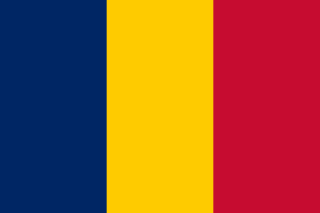
Chad flag

Moving to Chad

Chad flag

Chad is a destination for individuals and families considering relocation for work, study, family reunification, or tourism. The capital, N'Djamena, is a central hub for many expatriates, offering cultural experiences and opportunities. As you prepare for your move, learn about the local environment and immigration processes, especially within the first 90 days of arrival. Understanding life in Chad will help you settle in and adapt to your new surroundings.\n\nKeep in mind that visa requirements and entry conditions vary based on your nationality and purpose of stay. If you are applying for a work permit, student visa, or family visa, thorough preparation is essential. Confirm your visa status before booking travel and consider how your chosen pathway will affect your living arrangements and daily life in Chad.

Last updated 2026-05-17Official immigration portal

Review due soon

MigrantIQ research desk3 min readData confidence: 82/100

8 published visa guides

Capital

N'Djamena

Region

Africa (Middle Africa)

Currency

XAF

Cost of Living Index

N/A

Net Monthly Salary

N/A

Healthcare

Out-of-Pocket

Safety Index

N/A

Rent Index

N/A

Quality Index

N/A

Specific cost of living and rent index data for Chad is not available. However, costs can vary widely by city or region. N'Djamena may have different living expenses compared to rural areas. Conduct thorough research and consult local resources for a better understanding of the financial landscape in your chosen location.

Country Profile

In-depth facts & data for Chad on this page· Updated 2026-06-02

8 sections

Chad is a land-locked country in north-central Africa measuring 496,000 square miles (1,284,000 square km), roughly the size of Texas, Oklahoma and New Mexico combined. Most of its ethnically and linguistically diverse population of about 7.6 million to 8 million lives in the south, with densities ranging from 54 perso…

For planning only. Always verify immigration and legal rules on official government sites.

Demographics & population

Population size, age structure, migration, ethnicity, language, education, and health indicators.

Demographics & population in Chad: planning notes

1,412 words of country-specific briefing. Figures that affect visas or tax should still be checked on official sites.

Demographics & population in Chad for people weighing a move, not a tourist recap. The notes below use the country profile dataset plus Chad-specific planning fields. Where a figure is missing, that gap is left open instead of filled with a guess.

Population overview in Chad. the population is unevenly distributed due to contrasts in climate and physical geography

the highest density is found in the southwest, particularly around Lake Chad and points south

the dry Saharan zone to the north is the least densely populated

Population overview figures for Chad: For Chad, population is listed as 19,093,595. For Chad, population growth rate is listed as 3.01%. urban population: 24.4% of total population rate of urbanization: 4.1% annual rate of change For Chad, population in major urban areas is listed as 1.592 million N'DJAMENA (capital). For Chad, population: male/female is listed as male: 9,464,699 female: 9,628,896.

Age & family figures for Chad: 0-14 years: 45.8% (male 4,428,132/female 4,323,398) 15-64 years: 51.7% (male 4,831,744/female 5,031,383) 65 years and over: 2.5% (male 204,823/female 274,115) For Chad, median age is listed as total: 16.7 years male: 16.3 years female: 17.2 years. For Chad, birth rate - births/1,000 population is listed as 39. For Chad, death rate - deaths/1,000 population is listed as 9. For Chad, total fertility rate - children born/woman is listed as 5.24. For Chad, gross reproduction rate is listed as 3. women married by age 15: 24.2% women married by age 18: 60.6% men married by age 18: 8.1% For Chad, contraceptive prevalance rate - female 12-49 is listed as 8.1%. For Chad, contraceptive prevalence rate - female 12-49 is listed as 8.1%. For Chad, currently married women (ages 15-49) is listed as 70.6%. For Chad, mean age for mother's first birth (age 25-49) is listed as 18.1. For Chad, mother's mean age at first birth is listed as 18.1. at birth: 1.04 male(s)/female 0-14 years: 1.02 male(s)/female 15-64 years: 0.96 male(s)/female 65 years and over: 0.75 male(s)/female total population: 0.98 male(s)/female

Migration in Chad. Despite the start of oil production in 2003, around 40% of Chad's population lived below the poverty line as of 2018.

The population will continue to grow rapidly because of the country's very high fertility rate and large youth cohort - more than 65% of the populace is under the age of 25 as of 2022 - although the mortality rate is high and life expectancy is low.

Chad has the world's second highest maternal mortality rate as of 2017.

Among the primary risk factors are poverty, anemia, rural habitation, high fertility, poor education, and a lack of access to family planning and obstetric care.

Impoverished, uneducated adolescents living in rural areas are most affected.

To improve women's reproductive health and reduce fertility, Chad will need to increase women's educational attainment, job participation, and knowledge of and access to family planning.

Less than a quarter of women are literate, less than 10% use contraceptives, and more than 40% undergo genital cutting.

As of December 2022, more than 403,000 refugees from Sudan and more than 120,000 from the Central African Republic strain Chad's limited resources and create tensions in host communities.

Thousands of new refugees fled to Chad in 2013 to escape worsening violence in the Darfur region of Sudan.

The large refugee populations are hesitant to return to their home countries because of continued instability.

Chad was relatively stable in 2012 in comparison to other states in the region, but past fighting between government forces and opposition groups and inter-communal violence have left more than 380,000 of its citizens displaced in the eastern part of the country as of 2022.

Migration figures for Chad: For Chad, net migration rate - migrant(s)/1,000 population is listed as -0.1.

Ethnicity & language in Chad. Sara (Ngambaye/Sara/Madjingaye/Mbaye) 30.5%, Kanembu/Bornu/Buduma 9.8%, Arab 9.7%, Wadai/Maba/Masalit/Mimi 7%, Gorane 5.8%, Masa/Musseye/Musgum 4.9%, Bulala/Medogo/Kuka 3.7%, Marba/Lele/Mesme 3.5%, Mundang 2.7%, Bidiyo/Migaama/Kenga/Dangleat 2.5%, Dadjo/Kibet/Muro 2.4%, Tupuri/Kera 2%, Gabri/Kabalaye/Nanchere/Somrai 2%, Fulani/Fulbe/Bodore 1.8%, Karo/Zime/Peve 1.3%, Baguirmi/Barma 1.2%, Zaghawa/Bideyat/Kobe 1.1%, Tama/Assongori/Mararit 1.1%, Mesmedje/Massalat/Kadjakse 0.8%, other Chadian ethnicities 3.4%, Chadians of foreign ethnicities 0.9%, foreign nationals 0.3%, unspecified 1.7%

Ethnicity & language figures for Chad: French (official), Arabic (official), Sara (in south), more than 120 different languages and dialects For Chad, nationality noun is listed as noun: Chadian(s) adjective: Chadian.

Education figures for Chad: For Chad, literacy - total population is listed as 26.8%. For Chad, literacy - male is listed as 35.4%. For Chad, literacy - female is listed as 18.2%. For Chad, literacy definition is listed as age 15 and over can read and write French or Arabic. For Chad, education expenditures - percent of gdp is listed as 2.9%. For Chad, total school life expectancy - (primary to tertiary) is listed as total: 7 years male: 9 years female: 6 years.

Health & living conditions in Chad. degree of risk: very high food or waterborne diseases: bacterial and protozoal diarrhea, hepatitis A and E, and typhoid fever vectorborne diseases: malaria, dengue fever, and sexually transmitted diseases: hepatitis B (2024) water contact diseases: schistosomiasis animal contact diseases: rabies respiratory diseases: meningococcal meningitis note: on 31 August 2023, the US Centers for Disease Control and Prevention (CDC) issued a Travel Alert for polio in Africa

Chad is currently considered a high risk to travelers for circulating vaccine-derived polioviruses (cVDPV)

vaccine-derived poliovirus (VDPV) is a strain of the weakened poliovirus that was initially included in oral polio vaccine (OPV) and that has changed over time and behaves more like the wild or naturally occurring virus

this means it can be spread more easily to people who are unvaccinated against polio and who come in contact with the stool or respiratory secretions, such as from a sneeze, of an "infected" person who received oral polio vaccine

the CDC recommends that before any international travel, anyone unvaccinated, incompletely vaccinated, or with an unknown polio vaccination status should complete the routine polio vaccine series

before travel to any high-risk destination, the CDC recommends that adults who previously completed the full, routine polio vaccine series receive a single, lifetime booster dose of polio vaccine

Health & living conditions figures for Chad: For Chad, life expectancy at birth is listed as total population: 60 years male: 58.1 years female: 62 years. total: 62.5 deaths/1,000 live births male: 68.1 deaths/1,000 live births female: 56.7 deaths/1,000 live births total: 62.5 deaths/1,000 live births male: 68.1 deaths/1,000 live births female: 56.7 deaths/1,000 live births For Chad, maternal mortality rate - deaths/100,000 live births is listed as 1,063. For Chad, physicians density - physicians/1,000 population is listed as.06. For Chad, hospital bed density - beds/1,000 population is listed as.43. For Chad, health expenditures - percent of gdp is listed as 5.4%. For Chad, obesity - adult prevalence rate is listed as 6.1%. For Chad, tobacco use is listed as total: 8.3% male: 13.8% female: 2.7%. total: 0.55 liters of pure alcohol beer: 0.37 liters of pure alcohol wine: 0.01 liters of pure alcohol spirits: 0.01 liters of pure alcohol other alcohols: 0.16 liters of pure alcohol improved: urban: 90.2% of population rural: 51.9% of population total: 60.9% of population unimproved: urban: 9.8% of population rural: 48.1% of population total: 39.1% of population improved: urban: 57.5% of population rural: 4.9% of population total: 17.3% of population unimproved: urban: 42.5% of population rural: 95.1% of population total: 82.7% of population For Chad, underweight - percent of children under five years is listed as 18.9%.

Chad sits in Middle Africa, Africa, with N'Djamena as the capital. Common working and school languages in the dataset include French (official), Arabic (official), Sara (in south) and more than 120 different languages and dialects. English proficiency is listed as medium. Population and age figures on this page are planning signals, not a substitute for census releases or visa eligibility rules.

Chad is a land-locked country in north-central Africa measuring 496,000 square miles (1,284,000 square km), roughly the size of Texas, Oklahoma and New Mexico combined. Most of its ethnically

Early practical steps people actually use in Chad include: Confirm visa status and entry conditions before booking travel; Prepare temporary housing and proof of address where required; Set up local phone, banking, tax, and health coverage steps; Save emergency numbers, official portals, and scam-reporting channels. Treat the list as a reminder, not a filing checklist.

When a number on this page could change a visa or tax outcome, open https://evisatchad.com/ (Ministère de l'Intérieur Tchad) and match the current instruction. MigrantIQ is a planning aid, not a government filing system.

Population overview

Population

19,093,595

Population Growth Rate

3.01%

Population Distribution
  • the population is unevenly distributed due to contrasts in climate and physical geography
  • the highest density is found in the southwest, particularly around Lake Chad and points south
  • the dry Saharan zone to the north is the least densely populated
Urban Population
  • urban population: 24.4%
  • of total population rate of urbanization: 4.1% annual rate of change
Population in Major Urban Areas

1.592 million N'DJAMENA (capital)

Population: Male/Female
  • male: 9,464,699
  • female: 9,628,896

Age & family

Age Structure
  • years: 45.8% (male 4,428,132/female 4,323,398) 15-64
  • years: 51.7% (male 4,831,744/female 5,031,383) 65
  • years and over: 2.5% (male 204,823/female 274,115)
Median Age
  • total: 16.7
  • years male: 16.3
  • years female: 17.2 years
Birth Rate - births/1,000 population

39

Death Rate - deaths/1,000 population

9

Total Fertility Rate - children born/woman

5.24

Gross reproduction rate

3

Child Marriage
  • women married by age 15: 24.2%
  • women married by age 18: 60.6%
  • men married by age 18: 8.1%
Contraceptive Prevalance Rate - female 12-49

8.1%

Contraceptive Prevalence Rate - female 12-49

8.1%

Currently married women (ages 15-49)

70.6%

Mean Age for Mother's First Birth (age 25-49)

18.1

Mother's mean age at first birth

18.1

Sex Ratio at Birth - male/female
  • at birth: 1.04
  • male(s)/female 0-14 years: 1.02
  • male(s)/female 15-64 years: 0.96
  • male(s)/female 65 years and over: 0.75
  • male(s)/female total population: 0.98 male(s)/female

Migration

Net Migration Rate - migrant(s)/1,000 population

-0.1

Demographic profile

Despite the start of oil production in 2003, around 40% of Chad’s population lived below the poverty line as of 2018.

The population will continue to grow rapidly because of the country’s very high fertility rate and large youth cohort – more than 65% of the populace is under the age of 25 as of 2022 – although the mortality rate is high and life expectancy is low.

Chad has the world’s second highest maternal mortality rate as of 2017.

Among the primary risk factors are poverty, anemia, rural habitation, high fertility, poor education, and a lack of access to family planning and obstetric care.

Impoverished, uneducated adolescents living in rural areas are most affected.

To improve women’s reproductive health and reduce fertility, Chad will need to increase women’s educational attainment, job participation, and knowledge of and access to family planning.

Less than a quarter of women are literate, less than 10% use contraceptives, and more than 40% undergo genital cutting.

As of December 2022, more than 403,000 refugees from Sudan and more than 120,000 from the Central African Republic strain Chad’s limited resources and create tensions in host communities.

Thousands of new refugees fled to Chad in 2013 to escape worsening violence in the Darfur region of Sudan.

The large refugee populations are hesitant to return to their home countries because of continued instability.

Chad was relatively stable in 2012 in comparison to other states in the region, but past fighting between government forces and opposition groups and inter-communal violence have left more than 380,000 of its citizens displaced in the eastern part of the country as of 2022.

Ethnicity & language

Ethnic Groups

Sara (Ngambaye/Sara/Madjingaye/Mbaye) 30.5%, Kanembu/Bornu/Buduma 9.8%, Arab 9.7%, Wadai/Maba/Masalit/Mimi 7%, Gorane 5.8%, Masa/Musseye/Musgum 4.9%, Bulala/Medogo/Kuka 3.7%, Marba/Lele/Mesme 3.5%, Mundang 2.7%, Bidiyo/Migaama/Kenga/Dangleat 2.5%, Dadjo/Kibet/Muro 2.4%, Tupuri/Kera 2%, Gabri/Kabalaye/Nanchere/Somrai 2%, Fulani/Fulbe/Bodore 1.8%, Karo/Zime/Peve 1.3%, Baguirmi/Barma 1.2%, Zaghawa/Bideyat/Kobe 1.1%, Tama/Assongori/Mararit 1.1%, Mesmedje/Massalat/Kadjakse 0.8%, other Chadian ethnicities 3.4%, Chadians of foreign ethnicities 0.9%, foreign nationals 0.3%, unspecified 1.7%

Language Note

French (official), Arabic (official), Sara (in south), more than 120 different languages and dialects

Nationality Noun
  • Chadian(s) adjective: Chadian

Education

Literacy - total population

26.8%

Literacy - male

35.4%

Literacy - female

18.2%

Literacy Definition

age 15 and over can read and write French or Arabic

Education Expenditures - percent of GDP

2.9%

Total School Life Expectancy - (primary to tertiary)
  • total: 7
  • years male: 9
  • years female: 6 years

Health & living conditions

Life Expectancy at Birth
  • total population: 60
  • years male: 58.1
  • years female: 62 years
Infant Mortality Rate
  • total: 62.5 deaths/1,000
  • live births male: 68.1 deaths/1,000
  • live births female: 56.7 deaths/1,000 live births
Infant Mortality Rate - total deaths/1,000 live births
  • total: 62.5 deaths/1,000
  • live births male: 68.1 deaths/1,000
  • live births female: 56.7 deaths/1,000 live births
Maternal Mortality Rate - deaths/100,000 live births

1,063

Physicians Density - physicians/1,000 population

.06

Hospital Bed Density - beds/1,000 population

.43

Health Expenditures - percent of GDP

5.4%

Major Infectious Diseases - degree of risk
  • very high food or waterborne diseases: bacterial and protozoal diarrhea, hepatitis A and E,
  • and typhoid fever vectorborne diseases: malaria, dengue fever,
  • meningococcal meningitis note: on 31 August 2023, the US Centers for Disease Control and Prevention (CDC) issued a Travel Alert for polio in Africa; Chad is currently considered a high risk to travelers for circulating vaccine-derived polioviruses (cVDPV); vaccine-derived poliovirus (VDPV) is a strain of the weakened poliovirus that was initially included in oral polio vaccine (OPV) and that has changed over time and behaves more like the wild or naturally occurring virus; this means it can be spread more easily to people who are unvaccinated against polio and who come in contact with the stool or respiratory secretions, such as from a sneeze, of an “infected” person who received oral polio vaccine; the CDC recommends that before any international travel, anyone unvaccinated, incompletely vaccinated, or with an unknown polio vaccination status should complete the routine polio vaccine series; before travel to any high-risk destination, the CDC recommends that adults who previously completed the full, routine polio vaccine series receive a single, lifetime booster dose of polio vaccine
Obesity - adult prevalence rate

6.1%

Tobacco Use
  • total: 8.3%
  • male: 13.8%
  • female: 2.7%
Alcohol consumption per capita
  • total: 0.55
  • liters of pure alcohol beer: 0.37
  • liters of pure alcohol wine: 0.01
  • liters of pure alcohol spirits: 0.01
  • liters of pure alcohol other alcohols: 0.16 liters of pure alcohol
Drinking Water Source - percent of urban population improved
  • urban: 90.2%
  • of population rural: 51.9%
  • of population total: 60.9%
  • urban: 9.8%
  • of population rural: 48.1%
  • of population total: 39.1% of population
Sanitation Facility Access - percent of urban population improved
  • urban: 57.5%
  • of population rural: 4.9%
  • of population total: 17.3%
  • urban: 42.5%
  • of population rural: 95.1%
  • of population total: 82.7% of population
Underweight - percent of children under five years

18.9%

Economy

GDP, employment, industries, public finance, and currency.

Economy in Chad: planning notes

1,051 words of country-specific briefing. Figures that affect visas or tax should still be checked on official sites.

Economy in Chad for people weighing a move, not a tourist recap. The notes below use the country profile dataset plus Chad-specific planning fields. Where a figure is missing, that gap is left open instead of filled with a guess.

Economic overview in Chad. Chad's landlocked location results in high transportation costs for imported goods and dependence on neighboring countries.

Oil and agriculture are the mainstays of Chad's economy.

Oil provides about 60% of export revenues, while cotton, cattle, livestock, and gum arabic provide the bulk of Chad's non-oil export earnings.

The services sector contributes less than one-third of GDP and has attracted foreign investment mostly through telecommunications and banking.

Nearly all of Chad's fuel is provided by one domestic refinery, and unanticipated shutdowns occasionally result in shortages.

The country regulates the price of domestic fuel, providing an incentive for black market sales.

Although high oil prices and strong local harvests supported the economy in the past, low oil prices now stress Chad's fiscal position and have resulted in significant government cutbacks.

Chad relies on foreign assistance and foreign capital for most of its public and private sector investment.

Investment in Chad is difficult due to its limited infrastructure, lack of trained workers, extensive government bureaucracy, and corruption.

Chad obtained a three-year extended credit facility from the IMF in 2014 and was granted debt relief under the Heavily Indebted Poor Countries Initiative in April 2015.

In 2018, economic policy will be driven by efforts that started in 2016 to reverse the recession and repair damage to public finances and exports.

The government is implementing an emergency action plan to counterbalance the drop in oil revenue and diversify the economy.

Chad's national development plan (NDP) cost just over $9 billion with a financing gap of $6.7 billion.

The NDP emphasized the importance of private sector participation in Chad's development, as well as the need to improve the business environment, particularly in priority sectors such as mining and agriculture.

The Government of Chad reached a deal with Glencore and four other banks on the restructuring of a $1.45 billion oil-backed loan in February 2018, after a long negotiation.

The new terms include an extension of the maturity to 2030 from 2022, a two-year grace period on principal repayments, and a lower interest rate of the London Inter-bank Offer Rate (Libor) plus 2% - down from Libor plus 7.5%.

The original Glencore loan was to be repaid with crude oil assets, however, Chad's oil sales were hit by the downturn in the price of oil.

Chad had secured a $312 million credit from the IMF in June 2017, but the release of those funds hinged on restructuring the Glencore debt.

Chad had already cut public spending to try to meet the terms of the IMF program, but that prompted strikes and protests in a country where nearly 40% of the population lives below the poverty line.

Multinational partners, such as the African Development Bank, the EU, and the World Bank are likely to continue budget support in 2018, but Chad will remain at high debt risk, given its dependence on oil revenue and pressure to spend on subsidies and security.

Economic overview figures for Chad: Oil, cotton textiles, brewing, natron (sodium carbonate), soap, cigarettes, construction materials For Chad, gdp - per capita (ppp) is listed as $2,600.00 (USD). For Chad, gdp - real growth rate is listed as -1.1%.

GDP & growth figures for Chad: For Chad, gdp - gross domestic product (ppp) is listed as $24,970,000,000 (USD). For Chad, gdp per capita is listed as $2,600.00 (USD). For Chad, gdp - real growth rate is listed as -1.1%. For Chad, gdp - official exchange rate is listed as $10,440,000,000 (USD). Household consumption: 71.4% Government consumption: 4.4% Investment in fixed capital: 30.8% Investment in inventories: 0.4% Exports of goods and services: 25.3% Imports of goods and services: -32.3% For Chad, gdp by sector- agriculture is listed as 53%. For Chad, gdp by sector- industry is listed as 12.8%. For Chad, gdp by sector- services is listed as 34.2%. For Chad, industrial growth rate is listed as -5%.

Prices & money figures for Chad: For Chad, inflation rate is listed as 3.8%. For Chad, exchange rate per us dollar is listed as 605.7. For Chad, currency name and code is listed as Cooperation Financiere en Afrique Centrale francs (XAF). For Chad, fiscal year is listed as Calendar Year. For Chad, commercial bank prime lending rate is listed as 15.5%.

Employment & labor figures for Chad: For Chad, labor force is listed as 5,457,000. Oil, cotton textiles, brewing, natron (sodium carbonate), soap, cigarettes, construction materials Cotton, sorghum, millet, peanuts, sesame, corn, rice, potatoes, onions, cassava (manioc, tapioca), cattle, sheep, goats, camels For Chad, population below poverty line is listed as 46.7%. For Chad, child labor - # of children ages 5-14 is listed as 1,475,960. For Chad, child labor - % of children ages 5-14 is listed as 48%.

Labor by occupation figures for Chad: For Chad, labor force by occupation - industry and services is listed as 20%. For Chad, labor force by occupation- agriculture is listed as 80%.

Public finance figures for Chad: For Chad, annual budget is listed as $1,626,000,000 (USD). For Chad, public debt (% of gdp) is listed as 35.4%. For Chad, budget surplus or deficit - percent of gdp is listed as -5.1%. For Chad, taxes and other revenues - percent of gdp is listed as 15.6%.

People comparing Chad with other destinations usually start with wages, rent, and tax, not headline GDP. GDP per capita in the planning dataset is about 2,600. Recent growth is listed at -1.1 percent. Unemployment is listed at 1.1 percent. A typical net monthly salary signal is 0. A city-centre 1-bed rent signal is 0. A monthly groceries signal is 0. Local currency code: XAF. City prices vary, and these indexes do not replace a job offer or a proof-of-funds check.

Chad is a land-locked country in north-central Africa measuring 496,000 square miles (1,284,000 square km), roughly the size of Texas, Oklahoma and New Mexico combined. Most of its ethnically

When a number on this page could change a visa or tax outcome, open https://evisatchad.com/ (Ministère de l'Intérieur Tchad) and match the current instruction. MigrantIQ is a planning aid, not a government filing system.
Economic overview

Economic Overview

Chad’s landlocked location results in high transportation costs for imported goods and dependence on neighboring countries.

Oil and agriculture are the mainstays of Chad’s economy.

Oil provides about 60% of export revenues, while cotton, cattle, livestock, and gum arabic provide the bulk of Chad's non-oil export earnings.

The services sector contributes less than one-third of GDP and has attracted foreign investment mostly through telecommunications and banking.

Nearly all of Chad’s fuel is provided by one domestic refinery, and unanticipated shutdowns occasionally result in shortages.

The country regulates the price of domestic fuel, providing an incentive for black market sales.

Although high oil prices and strong local harvests supported the economy in the past, low oil prices now stress Chad’s fiscal position and have resulted in significant government cutbacks.

Chad relies on foreign assistance and foreign capital for most of its public and private sector investment.

Investment in Chad is difficult due to its limited infrastructure, lack of trained workers, extensive government bureaucracy, and corruption.

Chad obtained a three-year extended credit facility from the IMF in 2014 and was granted debt relief under the Heavily Indebted Poor Countries Initiative in April 2015.

In 2018, economic policy will be driven by efforts that started in 2016 to reverse the recession and repair damage to public finances and exports.

The government is implementing an emergency action plan to counterbalance the drop in oil revenue and diversify the economy.

Chad’s national development plan (NDP) cost just over $9 billion with a financing gap of $6.7 billion.

The NDP emphasized the importance of private sector participation in Chad’s development, as well as the need to improve the business environment, particularly in priority sectors such as mining and agriculture.

The Government of Chad reached a deal with Glencore and four other banks on the restructuring of a $1.45 billion oil-backed loan in February 2018, after a long negotiation.

The new terms include an extension of the maturity to 2030 from 2022, a two-year grace period on principal repayments, and a lower interest rate of the London Inter-bank Offer Rate (Libor) plus 2% - down from Libor plus 7.5%.

The original Glencore loan was to be repaid with crude oil assets, however, Chad's oil sales were hit by the downturn in the price of oil.

Chad had secured a $312 million credit from the IMF in June 2017, but the release of those funds hinged on restructuring the Glencore debt.

Chad had already cut public spending to try to meet the terms of the IMF program, but that prompted strikes and protests in a country where nearly 40% of the population lives below the poverty line.

Multinational partners, such as the African Development Bank, the EU, and the World Bank are likely to continue budget support in 2018, but Chad will remain at high debt risk, given its dependence on oil revenue and pressure to spend on subsidies and security.

Industries

Oil, cotton textiles, brewing, natron (sodium carbonate), soap, cigarettes, construction materials

GDP - per capita (PPP)

$2,600.00 (USD)

GDP - real growth rate

-1.1%

GDP & growth

GDP - Gross Domestic Product (PPP)

$24,970,000,000 (USD)

GDP Per Capita

$2,600.00 (USD)

GDP - real growth rate

-1.1%

GDP - official exchange rate

$10,440,000,000 (USD)

GDP - composition, by end use
  • Household consumption: 71.4%
  • Government consumption: 4.4%
  • Investment in fixed capital: 30.8%
  • Investment in inventories: 0.4%
  • Exports of goods and services: 25.3%
  • Imports of goods and services: -32.3%
GDP by Sector- agriculture

53%

GDP by Sector- Industry

12.8%

GDP by Sector- services

34.2%

Industrial Growth Rate

-5%

Prices & money

Inflation Rate

3.8%

Exchange Rate per US Dollar

605.7

Currency Name and Code

Cooperation Financiere en Afrique Centrale francs (XAF)

Fiscal Year

Calendar Year

Commercial Bank Prime Lending Rate

15.5%

Employment & labor

Labor Force

5,457,000

Major Industries

Oil, cotton textiles, brewing, natron (sodium carbonate), soap, cigarettes, construction materials

Agriculture Products

Cotton, sorghum, millet, peanuts, sesame, corn, rice, potatoes, onions, cassava (manioc, tapioca), cattle, sheep, goats, camels

Population Below Poverty Line

46.7%

Child Labor - # of children ages 5-14

1,475,960

Child Labor - % of children ages 5-14

48%

Public finance

Annual Budget

$1,626,000,000 (USD)

Public Debt (% of GDP)

35.4%

Budget Surplus or Deficit - percent of GDP

-5.1%

Taxes and other revenues - percent of GDP

15.6%

Government & politics

Government structure, legal system, citizenship, and international relations.

Government & politics in Chad: planning notes

1,282 words of country-specific briefing. Figures that affect visas or tax should still be checked on official sites.

Government & politics in Chad for people weighing a move, not a tourist recap. The notes below use the country profile dataset plus Chad-specific planning fields. Where a figure is missing, that gap is left open instead of filled with a guess.

Identity & names in Chad. named for Lake Chad, which lies along the country's western border

the word "tsade" means "large body of water" or "lake" in several local native languages note: the only country whose name is composed of a single syllable with a single vowel

Identity & names figures for Chad: For Chad, full country name is listed as Republic of Chad. For Chad, country name is listed as Chad. For Chad, local - long is listed as Republique du Tchad/Jumhuriyat Tshad. For Chad, local - short is listed as Tchad/Tshad. For Chad, independence is listed as 11 August 1960 (from France). For Chad, national holiday is listed as Independence Day, 11 August (1960).

Political system in Chad. latest adopted by National Transitional Council 27 June 2023, approved by referendum 17 December, verified by Chad Supreme Court 28 December, promulgated 1 January 2024 amendments: previous process: proposed as a revision by the president of the republic after a Council of Ministers (cabinet) decision or by the National Assembly

approval for consideration of a revision requires at least three-fifths majority vote by the Assembly

passage requires approval by referendum or at least two-thirds majority vote by the Assembly

chief of state: President Mahamat Idriss DÉBY (since 6 May 2024) head of government: Prime Minister Allamaye HALINA (since 23 May 2024) cabinet: Council of Ministers election/appointment process: president directly elected by absolute-majority popular vote in 2 rounds, if needed, for a 5-year term (no term limits) most recent election date: 6 May 2024 election results: 2024: Mahamat Idriss DÉBY elected president; percent of vote - Mahamat Idriss DÉBY (MPS) 61%, Succes MASRA (Transformers) 18.5%, Albert PADACKE 16.9%, other 3.6% 2021: Lt.

Idriss DÉBY reelected transitional president; percent of vote - Lt.

Idriss DÉBY (MPS) 79.3%, Pahimi PADACKET Albert (RNDT) 10.3%, Lydie BEASSEMDA (Party for Democracy and Independence) 3.2%, other 7.2%

description: formerly a unicameral National Assembly or Assemblée Nationale (188 seats

163 directly elected in multi-seat constituencies by proportional representation vote and 25 directly elected in single-seat constituencies by absolute majority vote with a second round if needed

note - on 5 October 2021, Interim President Mahamat Idriss DEBY installed 93 members of an interim parliament, called the National Transitional Council (NTC), replacing the National Assembly, which was disbanded after he took control of the country on 20 April 2021

according to DEBY, the NTC will act as a national assembly of transition until the country's next elections take place elections: members of the so called "National Transitional Council" were installed by Interim President DEBY on 5 October 2021 (next parliamentary elections to be held September 2022) election results: percent of vote by party - NA

composition - men 64, women 29, percent of women 31.2% note: the National Assembly mandate was extended to 2020, reportedly due to a lack of funding for the scheduled 2015 election

the MPS has held a majority in the NA since 1997

highest court(s): Supreme Court (consists of the chief justice, 3 chamber presidents, and 12 judges or councilors and divided into 3 chambers)

Constitutional Council (consists of 3 judges and 6 jurists) judge selection and term of office: Supreme Court chief justice selected by the president

councilors - 8 designated by the president and 7 by the speaker of the National Assembly

chief justice and councilors appointed for life

Constitutional Council judges - 2 appointed by the president and 1 by the speaker of the National Assembly

jurists - 3 each by the president and by the speaker of the National Assembly

judges appointed for 9-year terms subordinate courts: High Court of Justice

Chadian Convention for Peace and Development or CTPD [Laoukein Kourayo MEDARD] Federation Action for the Republic or FAR [Ngarledjy YORONGAR] National Rally for Development and Progress or Viva-RNDP [Dr.

Nouradine Delwa Kassire COUMAKOYE] National Union for Democracy and Renewal or UNDR [Saleh KEBZABO] Party for Unity and Reconstruction or PUR Patriotic Salvation Movement or MPS [formerly Idriss DEBY] Rally for Democracy and Progress or RDP [Mahamat Allahou TAHER] Rally of Chadian Nationalists/Awakening or RNDT/Le Reveil [Albert Pahimi PADACKE] Social Democratic Party for a Change-over of Power or PDSA [Malloum YOBODA] Union for Democracy and the Republic or UDR Union for Renewal and Democracy or URD [Felix Romadoumngar NIALBE] Transformers [Succès MASRA] note 1: 19 additional parties each contributed one member note 2: only parties with at least two seats in the last elected National Assembly (February 2011) included note: on 5 October 2021, Interim President Mahamat Idriss DEBY appointed 93 members to the interim National Transitional Council (NTC); 30% of the NTC members were retained from parties previously represented in the National Assembly

Political system figures for Chad: For Chad, government type is listed as presidential republic. For Chad, legal system: is listed as mixed legal system of civil and customary law. 23 provinces (provinces, singular - province) Barh-El-Gazel, Batha, Borkou, Chari-Baguirmi, Ennedi-Est, Ennedi-Ouest, Guera, Hadjer-Lamis, Kanem, Lac, Logone Occidental, Logone Oriental, Mandoul, Mayo-Kebbi-Est, Mayo-Kebbi-Ouest, Moyen-Chari, N'Djamena, Ouaddai, Salamat, Sila, Tandjile, Tibesti, Wadi-Fira For Chad, suffrage: is listed as 18 years of age; universal. citizenship by birth: no citizenship by descent only: both parents must be citizens of Chad dual citizenship recognized: Chadian law does not address dual citizenship residency requirement for naturalization: 15 years

Capital & time figures for Chad: For Chad, capital name is listed as N'Djamena. For Chad, capital - geographic coordinate is listed as 12 06 N, 15 02 E. For Chad, capital time difference is listed as UTC+1 (6 hours ahead of Washington, DC, during Standard Time).

International role in Chad. ACP, AfDB, AU, BDEAC, CEMAC, EITI (compliant country), FAO, FZ, G-77, IAEA, IBRD, ICAO, ICCt, ICRM, IDA, IDB, IFAD, IFC, IFRCS, ILO, IMF, Interpol, IOC, IOM, IPU, ITSO, ITU, ITUC (NGOs), LCBC, MIGA, MNJTF, NAM, OIC, OIF, OPCW, UN, UNCTAD, UNESCO, UNIDO, UNOCI, UNOOSA, UNWTO, UPU, WCO, WHO, WIPO, WMO, WTO

chief of mission: Ambassador Alexander LASKARIS (since 18 August 2022) embassy: Rond-Point Chagoua, B.P. 413, N'Djamena mailing address: 2410 N'Djamena Place, Washington DC 20521-2410 telephone: [235] 2251-5017 FAX: [235] 2253-9102 email address and website: NdjamenaACS@state.gov https://td.usembassy.gov/

International role figures for Chad: For Chad, international law organization participation: is listed as has not submitted an ICJ jurisdiction declaration; accepts ICCt jurisdiction. chief of mission: Ambassador KITOKO GATA Ngoulou (since 30 June 2023) chancery: 2401 Massachusetts Avenue NW, Washington, DC 20008 telephone: [1] (202) 652-1312 FAX: [1] (202) 578-0431 email address and website: info@chadembassy.us https://chadembassy.us/

Chad's government and legal structure matters for visas, ID, tax residence, and later naturalization. The immigration authority in our records is Ministère de l'Intérieur Tchad. Confirm current forms and fees on https://evisatchad.com/. In the planning dataset, permanent residence is listed at 10 years of qualifying stay; dual citizenship is listed as restricted.

Chad is a land-locked country in north-central Africa measuring 496,000 square miles (1,284,000 square km), roughly the size of Texas, Oklahoma and New Mexico combined. Most of its ethnically

Early practical steps people actually use in Chad include: Confirm visa status and entry conditions before booking travel; Prepare temporary housing and proof of address where required; Set up local phone, banking, tax, and health coverage steps; Save emergency numbers, official portals, and scam-reporting channels. Treat the list as a reminder, not a filing checklist.

When a number on this page could change a visa or tax outcome, open https://evisatchad.com/ (Ministère de l'Intérieur Tchad) and match the current instruction. MigrantIQ is a planning aid, not a government filing system.

Identity & names

Full Country Name

Republic of Chad

Country Name

Chad

Local - Long

Republique du Tchad/Jumhuriyat Tshad

Local - Short

Tchad/Tshad

Etymology- history of name

named for Lake Chad, which lies along the country's western border; the word "tsade" means "large body of water" or "lake" in several local native languages note: the only country whose name is composed of a single syllable with a single vowel

Independence

11 August 1960 (from France)

National Holiday

Independence Day, 11 August (1960)

Political system

Government Type

presidential republic

Constitution
  • history: several previous; latest adopted by National Transitional Council 27 June 2023, approved by referendum 17 December, verified by Chad Supreme Court 28 December,
  • previous process: proposed as a revision by the president of the republic after a Council of Ministers (cabinet) decision or by the National Assembly; approval for consideration of a revision requires at least three-fifths majority vote by the Assembly; passage requires approval by referendum or at least two-thirds majority vote by the Assembly
Legal System:

mixed legal system of civil and customary law

Executive Branch:
  • chief of state: President Mahamat Idriss DÉ
  • Council of Ministers election/appointment process: president directly elected by absolute-majority popular vote in 2 rounds, if needed,
  • for a 5-year term (no term limits) most recent election date: 6
  • May 2024 election results: 2024: Mahamat Idriss DÉBY elected president; percent of vote - Mahamat Idriss DÉBY (MPS) 61%, Succes MASRA (Transformers) 18.5%, Albert PADACKE 16.9%, other 3.6% 2021: Lt. Gen. Idriss DÉBY reelected transitional president; percent of vote - Lt. Gen. Idriss DÉBY (MPS) 79.3%, Pahimi PADACKET Albert (RNDT) 10.3%, Lydie BEASSEMDA (Party for Democracy and Independence) 3.2%, other 7.2%
Legislative Branch:

Description

formerly a unicameral National Assembly or Assemblée Nationale (188 seats; 163 directly elected in multi-seat constituencies by proportional representation vote and 25 directly elected in single-seat constituencies by absolute majority vote with a second round if needed; members serve 4-year terms);

Note

  • on 5 October 2021, Interim President Mahamat Idriss DEBY installed 93 members of an interim parliament, called the National Transitional Council (NTC), replacing the National Assembly, which was disbanded after he took control of the country on 20 April 2021
  • according to DEBY, the NTC will act as a national assembly of transition until the country’s next elections take place

Elections

members of the so called "National Transitional Council" were installed by Interim President DEBY on 5 October 2021 (next parliamentary elections to be held September 2022)

Election Results

  • percent of vote by party - NA
  • seats by party - NA;

Composition

men 64, women 29, percent of women 31.2%

Note

  • the National Assembly mandate was extended to 2020, reportedly due to a lack of funding for the scheduled 2015 election
  • the MPS has held a majority in the NA since 1997
Judicial Branch:
  • highest court(s): Supreme Court (consists of the chief justice, 3 chamber presidents, and 12 judges or councilors and divided into 3 chambers); Constitutional Council (consists
  • of 3 judges and 6 jurists) judge selection and term of office: Supreme Court chief justice selected by the president; councilors - 8 designated by the president and 7 by the speaker of the National Assembly; chief justice and councilors appointed for life; Constitutional Council judges - 2 appointed by the president and 1 by the speaker of the National Assembly; jurists - 3 each by the president and by the speaker of the National Assembly;
  • judges appointed for 9-year terms subordinate courts: High Court of Justice; Courts of Appeal; tribunals; justices of the peace
Regions or States:

Summary

23 provinces (provinces

Regions or States

  • singular - province) Barh-El-Gazel
  • Batha
  • Borkou
  • Chari-Baguirmi
  • Ennedi-Est
  • Ennedi-Ouest
  • Guera
  • Hadjer-Lamis
  • Kanem
  • Lac
  • Logone Occidental
  • Logone Oriental
  • Mandoul
  • Mayo-Kebbi-Est
  • Mayo-Kebbi-Ouest
  • Moyen-Chari
  • N'Djamena
  • Ouaddai
  • Salamat
  • Sila
  • Tandjile
  • Tibesti
  • Wadi-Fira
Political Parties and Leaders:
  • Chadian Convention for Peace and Development or CTPD [Laoukein Kourayo MEDARD]
  • Federation Action for the Republic or FAR [Ngarledjy YORONGAR]
  • National Rally for Development and Progress or Viva-RNDP [Dr. Nouradine Delwa Kassire COUMAKOYE]
  • National Union for Democracy and Renewal or UNDR [Saleh KEBZABO]
  • Party for Unity and Reconstruction or PUR Patriotic Salvation Movement or MPS [formerly Idriss DEBY]
  • Rally for Democracy and Progress or RDP [Mahamat Allahou TAHER]
  • Rally of Chadian Nationalists/Awakening or RNDT/Le Reveil [Albert Pahimi PADACKE]
  • Social Democratic Party for a Change-over of Power or PDSA [Malloum YOBODA]
  • Union for Democracy and the Republic or UDR Union for Renewal and Democracy or URD [Felix Romadoumngar NIALBE]
  • Transformers [Succès MASRA] note 1: 19 additional parties each contributed one member note 2: only parties with at least two seats in the last elected National Assembly (February 2011) included
  • Note: on 5 October 2021, Interim President Mahamat Idriss DEBY appointed 93 members to the interim National Transitional Council (NTC); 30% of the NTC members were retained from parties previously represented in the National Assembly
Suffrage:

18 years of age; universal

Citizenship Criteria:
  • no citizenship by descent only: both
  • parents must be citizens of Chad dual citizenship recognized: Chadian law does not addr
  • ess dual citizenship residency requirement for naturalization: 15 years

Capital & time

Capital Name

N'Djamena

Capital - geographic coordinate

12 06 N, 15 02 E

Capital Time Difference

UTC+1 (6 hours ahead of Washington, DC, during Standard Time)

International role

International Organization Participation:

ACP, AfDB, AU, BDEAC, CEMAC, EITI (compliant country), FAO, FZ, G-77, IAEA, IBRD, ICAO, ICCt, ICRM, IDA, IDB, IFAD, IFC, IFRCS, ILO, IMF, Interpol, IOC, IOM, IPU, ITSO, ITU, ITUC (NGOs), LCBC, MIGA, MNJTF, NAM, OIC, OIF, OPCW, UN, UNCTAD, UNESCO, UNIDO, UNOCI, UNOOSA, UNWTO, UPU, WCO, WHO, WIPO, WMO, WTO

International Law Organization Participation:

has not submitted an ICJ jurisdiction declaration; accepts ICCt jurisdiction

Diplomatic Representation from US:

chief of mission

Ambassador Alexander LASKARIS (since 18 August 2022) embassy: Rond-Point Chagoua, B.P. 413, N’Djamena mailing address: 2410 N'Djamena Place, Washington DC 20521-2410

telephone

[235] 2251-5017

FAX

[235] 2253-9102

Email address and website

Diplomatic Representation in the US:

chief of mission

Ambassador KITOKO GATA Ngoulou (since 30 June 2023)

chancery

2401 Massachusetts Avenue NW, Washington, DC 20008

telephone

[1] (202) 652-1312

FAX

[1] (202) 578-0431

Email address and website

Geography & environment

Location, land area, terrain, climate, and natural resources.

Geography & environment in Chad: planning notes

563 words of country-specific briefing. Figures that affect visas or tax should still be checked on official sites.

Geography & environment in Chad for people weighing a move, not a tourist recap. The notes below use the country profile dataset plus Chad-specific planning fields. Where a figure is missing, that gap is left open instead of filled with a guess.

Location & size figures for Chad: For Chad, geographic location is listed as Africa. For Chad, geographic coordinates is listed as 15 00 N, 19 00 E. For Chad, total area is listed as 495,752 Square Miles 1,284,000 Square Kilometers. For Chad, land area is listed as 486,177 Square Miles 1,259,200 Square Kilometers. For Chad, water area is listed as 9,575 Square Miles 24,800 Square Kilometers. For Chad, land boundaries is listed as 3,708 Miles 5,968 Kilometers. Cameroon 1,094 km, Central African Republic 1,197 km, Libya 1,055 km, Niger 1,175 km, Nigeria 87 km, Sudan 1,360 km

Physical geography figures for Chad: Broad, arid plains in the center, desert in the north, mountains in the northwest, lowlands in the south For Chad, highest point is listed as 3,415 Meters. For Chad, highest point location is listed as Emi Koussi 3,415 m. For Chad, lowest point is listed as 160 Meters. For Chad, lowest point location is listed as Djourab Depression 160 m. For Chad, natural resources is listed as Petroleum, uranium, natron, kaolin, fish (Lake Chad). For Chad, irrigated land is listed as 117 Square Miles 302 Square Kilometers.

Climate & time figures for Chad: For Chad, time zone is listed as UTC+1 (6 hours ahead of Washington, DC, during Standard Time).

Climate in Chad. The capital, N'Djamena, which is located in the Sahelian Zone, has a rainy season extending from June to October, characterized by sporadic, heavy rains and increased humidity with high temperatures in excess of 90°F.

The remaining 8 months of the year are dry and generally hot, with a brief respite from November to February when daytime temperatures seldom exceed 90°F and lows at night descend to the 60s.

Northeasterly winds off the desert, called the "harmattan," blow regularly during the dry season and envelop the town in a shroud of thick dust.

April/May temperatures regularly exceed 110°F.

Climate figures for Chad: Broad, arid plains in the center, desert in the north, mountains in the northwest, lowlands in the south For Chad, location is listed as Central Africa, south of Libya. For Chad, total area is listed as 495,752 Square Miles 1,284,000 Square Kilometers. Cameroon 1,094 km, Central African Republic 1,197 km, Libya 1,055 km, Niger 1,175 km, Nigeria 87 km, Sudan 1,360 km

Environment figures for Chad: Inadequate supplies of potable water; improper waste disposal in rural areas contributes to soil and water pollution; desertification Party To: Biodiversity, Climate Change, Desertification, Endangered Species, Hazardous Wastes, Ozone Layer Protection, Wetlands signed, but not ratified: Law of the Sea, Marine Dumping

Chad's capital is N'Djamena in Middle Africa, Africa. Traffic keeps to the right. Geography here is for settlement planning: climate, distance to work, and which city you can actually afford, not a travel brochure.

Chad is a land-locked country in north-central Africa measuring 496,000 square miles (1,284,000 square km), roughly the size of Texas, Oklahoma and New Mexico combined. Most of its ethnically

When a number on this page could change a visa or tax outcome, open https://evisatchad.com/ (Ministère de l'Intérieur Tchad) and match the current instruction. MigrantIQ is a planning aid, not a government filing system.

Location & size

Geographic Location

Africa

Geographic Coordinates

15 00 N, 19 00 E

Total Area

495,752 Square Miles 1,284,000 Square Kilometers

Land Area

486,177 Square Miles 1,259,200 Square Kilometers

Water Area

9,575 Square Miles 24,800 Square Kilometers

Land Boundaries

3,708 Miles 5,968 Kilometers

Border Countries

Cameroon 1,094 km, Central African Republic 1,197 km, Libya 1,055 km, Niger 1,175 km, Nigeria 87 km, Sudan 1,360 km

Physical geography

Terrain

Broad, arid plains in the center, desert in the north, mountains in the northwest, lowlands in the south

Highest Point

3,415 Meters

Highest Point Location

Emi Koussi 3,415 m

Lowest Point

160 Meters

Lowest Point Location

Djourab Depression 160 m

Natural Resources

Petroleum, uranium, natron, kaolin, fish (Lake Chad)

Irrigated Land

117 Square Miles 302 Square Kilometers

Climate & time

Time Zone

UTC+1 (6 hours ahead of Washington, DC, during Standard Time)

Climate

Climate

The capital, N'Djamena, which is located in the Sahelian Zone, has a rainy season extending from June to October, characterized by sporadic, heavy rains and increased humidity with high temperatures in excess of 90°F. The remaining 8 months of the year are dry and generally hot, with a brief respite from November to February when daytime temperatures seldom exceed 90°F and lows at night descend to the 60s. Northeasterly winds off the desert, called the "harmattan," blow regularly during the dry season and envelop the town in a shroud of thick dust. April/May temperatures regularly exceed 110°F.

Terrain

Broad, arid plains in the center, desert in the north, mountains in the northwest, lowlands in the south

Location

Central Africa, south of Libya

Total Area

495,752 Square Miles 1,284,000 Square Kilometers

Border Countries

Cameroon 1,094 km, Central African Republic 1,197 km, Libya 1,055 km, Niger 1,175 km, Nigeria 87 km, Sudan 1,360 km

Environment

Environment - Current Issues

Inadequate supplies of potable water

improper waste disposal in rural areas contributes to soil and water pollution

desertification

Environment - International Agreements

Party To: Biodiversity, Climate Change, Desertification, Endangered Species, Hazardous Wastes, Ozone Layer Protection, Wetlands signed, but not ratified: Law of the Sea, Marine Dumping

Trade

Imports, exports, and trading partners.

Trade in Chad: planning notes

270 words of country-specific briefing. Figures that affect visas or tax should still be checked on official sites.

Trade in Chad for people weighing a move, not a tourist recap. The notes below use the country profile dataset plus Chad-specific planning fields. Where a figure is missing, that gap is left open instead of filled with a guess.

Trade overview figures for Chad: For Chad, exports is listed as $4,053,000,000 (USD). For Chad, imports is listed as $3,075,000,000 (USD). For Chad, major exports is listed as Oil, livestock, cotton, sesame, gum arabic, shea butter. For Chad, major imports is listed as Machinery and transportation equipment, industrial goods, foodstuffs, textiles.

Trading partners figures for Chad: For Chad, top export partners is listed as United States 58.5%, India 13.3%, Japan 11.3%, China 4.1%. France 16.5%, China 14.2%, Cameroon 11%, United States 6.4%, India 6%, Belgium 5.7%, Italy 4.8%

Partners (summary) figures for Chad: For Chad, export partners is listed as United States 58.5%, India 13.3%, Japan 11.3%, China 4.1%. France 16.5%, China 14.2%, Cameroon 11%, United States 6.4%, India 6%, Belgium 5.7%, Italy 4.8%

Trade figures for Chad help explain which industries hire, which ports matter, and how imported goods show up in grocery prices. Settlements and contracts usually run in XAF. They are not a visa pathway. Work permission still depends on the destination's immigration rules.

Chad is a land-locked country in north-central Africa measuring 496,000 square miles (1,284,000 square km), roughly the size of Texas, Oklahoma and New Mexico combined. Most of its ethnically

When a number on this page could change a visa or tax outcome, open https://evisatchad.com/ (Ministère de l'Intérieur Tchad) and match the current instruction. MigrantIQ is a planning aid, not a government filing system.

Trade overview

Exports

$4,053,000,000 (USD)

Imports

$3,075,000,000 (USD)

Major Exports

Oil, livestock, cotton, sesame, gum arabic, shea butter

Major Imports

Machinery and transportation equipment, industrial goods, foodstuffs, textiles

Trading partners

Top Export Partners

United States 58.5%, India 13.3%, Japan 11.3%, China 4.1%

Top Import Partners

France 16.5%, China 14.2%, Cameroon 11%, United States 6.4%, India 6%, Belgium 5.7%, Italy 4.8%

Partners (summary)

Export Partners

United States 58.5%, India 13.3%, Japan 11.3%, China 4.1%

Import Partners

France 16.5%, China 14.2%, Cameroon 11%, United States 6.4%, India 6%, Belgium 5.7%, Italy 4.8%

Travel & safety

Safety, crime, medical care, and travel conditions for visitors and newcomers.

Travel & safety in Chad: planning notes

1,641 words of country-specific briefing. Figures that affect visas or tax should still be checked on official sites.

Travel & safety in Chad for people weighing a move, not a tourist recap. The notes below use the country profile dataset plus Chad-specific planning fields. Where a figure is missing, that gap is left open instead of filled with a guess.

Before you travel in Chad. Chad is a developing country in north-central Africa with one of the lowest per capita incomes in the world and has historically faced challenges in the areas of political stability and economic development.

Years of war, drought, and regional instability have severely damaged the country's infrastructure and hampered the development of its institutions.

French and Arabic are the official languages.

U.S. citizens planning to travel to Chad should read the current Worldwide Caution Travel Alert and the Travel Warning for Chad, which warns U.S. citizens of the risks of traveling to Chad.

Due to the insecurity caused by high levels of violent crime, the potential risk of clashes between Chadian security forces and criminal or other armed groups, and the risk of a sudden, unanticipated outbreak of conflict among the populations living in these areas, we caution against all travel to eastern Chad, the Chad/Sudan border area, and the Chad/Central African Republic border area.

Embassy in Chad reviews each request for official government travel outside the capital and prohibits travel to eastern Chad and most border regions without express authorization.

If you are affiliated with humanitarian relief efforts, you should review security precautions and consider measures to mitigate your exposure to violent crime.

The Government of Chad requires travel authorization (autorisation de circuler) for anyone traveling to a humanitarian zone or refugee camp.

If you are residing in Chad, you should exercise caution throughout the country.

Crime & law in Chad. U.S. citizens and many foreigners are perceived to be wealthy and should take precautions to avoid becoming crime victims.

You should not leave cash or valuables unsecured in your hotel room, nor should you wear expensive jewelry or show large amounts of cash.

You should dress modestly, walk outside only during daylight hours, and lock your car doors.

Petty crimes such as purse snatching, pick-pocketing, and theft from vehicles do occur, particularly in areas frequented by expatriates.

The potential for violent crime against expatriates remains a concern.

Carjacking, burglary, and vehicle thefts increase during times of political instability.

Historically, expatriate residences have been targeted for armed robbery, and some foreigners have been assaulted in the process, although there have been no recent incidents reported.

While you are traveling in Chad, you are subject to its laws even if you are a U.S. citizen.

Foreign laws and legal systems can be vastly different than our own.

In some places, you may be taken in for questioning if you don't have your passport with you.

In some places, it is illegal to take pictures of certain buildings.

In some places driving under the influence could land you immediately in jail.

These criminal penalties will vary from country to country.

There are also some things that might be legal in the country you visit, but still illegal in the United States.

You can be prosecuted under U.S. law if you buy pirated goods.

Engaging in sexual conduct with children or using or disseminating child pornography in a foreign country is a crime prosecutable in the United States.

If you break local laws in Chad, your U.S. passport won't help you avoid arrest or prosecution.

It's very important to know what's legal and what's not where you are going.

Based on the Vienna Convention on Consular Relations, bilateral agreements with certain countries, and customary international law, if you are arrested in Chad, you have the option to request that the police, prison officials, or other authorities alert the nearest U.S. embassy or consulate of your arrest, and to have communications from you forwarded to the nearest U.S. embassy or consulate.

Languages French (official), Arabic (official), Sara (in south), more than 120 different languages and dialects

Health & roads in Chad. Medical facilities in Chad are extremely limited.

Medicines are in short supply or unavailable, including many over-the-counter preparations sold in the United States.

Travelers should carry any needed, properly labeled, medicines with them.

In the event of major injury or illness, visitors generally will require medical evacuation.

There are two medical clinics in the capital of N'Djamena which offer "international standard" medical care: International SOS and Europ-Assistance.

These are not walk-in clinics and advance membership is required to access services.

This information is provided for informational purposes only and in no way constitutes an endorsement, expressed or implied, by the United States Department of State Malaria is a serious and sometimes fatal disease.

Plasmodium falciparum malaria, the type that predominates in Chad, is resistant to the antimalarial drug chloroquine.

Because travelers to Chad are at high risk for contracting malaria, the Centers for Disease Control and Prevention (CDC) advise that travelers should take one of the following antimalarial drugs: mefloquine (Lariam - TM), doxycycline, or atovaquone/proguanil (Malarone -TM).

Travelers who become ill with a fever or flu-like illness while traveling in a malaria-risk area, and up to one year after returning home, should seek prompt medical attention and tell the physician their travel history and what antimalarials they have been taking.

For additional information on malaria, including protective measures, visit the CDC Travelers' Health website.

Other widespread illnesses in Chad include diarrhea and upper respiratory infections.

HIV/AIDS is becoming an increasingly serious problem as infection rates are at alarming levels (up to 25 percent in high-risk groups).

Meningitis outbreaks usually occur annually and several other diseases (cholera, diphtheria, chicken pox, typhoid) periodically appear.

While in a foreign country, you may encounter road conditions that differ significantly from those in the United States.

The information below concerning Chad is provided for general reference only, and may not be totally accurate in a particular location or circumstance.

Roads are in poor condition and dangerous.

In the capital city of N'Djamena, only the main roads are paved; although the government continues with its construction program, hard surface highways are still limited in number and distance in Chad; the rest of the roads are either hard-packed dirt or looser dirt and sand.

During the rainy season (mid-June to mid-September) many roads become impassable or are restricted by rain barriers, while during the dryer season, clouds of dust rising from the roads reduce visibility.

Visitors should take great care while driving.

Both paved and unpaved roads are poorly maintained, and often have large ruts and potholes.

All drivers should adjust their speed accordingly.

At night, streets are not lit and drivers frequently operate cars or motorcycles without lighting headlights; it is imperative to watch for pedestrians, bicyclists, motorcyclists, and livestock, as they may not be visible until they are in very close proximity.

Driving in Chad tends to be erratic both in cities and in rural areas.

In cities, particularly N'Djamena, motorists share the roads with bicycles, motor scooters, pedestrians, and non-motorized wheelchairs.

Lanes are not marked, and it is not uncommon for a normally two-lane thoroughfare to become a four-lane road during rush hours (generally 7:00 a.m. - 9:00 a.m. and 3:00 p.m. - 6:00 p.m.

Monday - Thursday; 7:00 a.m. - 9:00 a.m. and 11:00 a.m. - 12:30 p.m. on Friday).

Drivers are urged to be particularly observant at these times because motorists often attempt to overtake slower traffic by moving into oncoming lanes, usually at high speeds.

There are only a few traffic lights in N'Djamena, they are often out of service, and drivers frequently do not obey those traffic lights that are in service.

Drivers yield to traffic on their right, particularly when entering the many traffic circles.

In rural areas, drivers should watch for livestock crossing the roads, and for large hawks that rest on the roads.

These birds can be fearless, and cause damage by smashing into drivers' windshields; drivers may avoid this by slowing down when approaching the hawks and allowing them sufficient time to fly away.

Finally, drivers should be alert to older transport trucks traveling between cities, which do not always have functioning headlights.

No emergency services exist, so drivers should exercise extreme caution.

When traveling by car, be sure to carry a spare tire.

Roadside service is limited to good Samaritans and children who will help push cars to the side or out of holes.

When traveling outside the capital, it is imperative to carry sufficient quantities of drinking water.

Drivers should ensure that their gas tanks are at least half-full at all times, as gas stations are not widely available.

Gas may be purchased in an emergency in bottles from roadside stands, but it is generally of poor quality.

Travelers on roads in all areas of the country are subject to attack by armed bandits.

Safety in Chad is local. Neighbourhood, night transport, and documentation checks matter more than a single country score. Tap water is listed as generally safe in the planning dataset. Healthcare system type: Out-of-Pocket. Immigrant health access note: None. Health coverage waiting period in the dataset: -1 days. Read current travel advice from your origin government before you book.

Chad is a land-locked country in north-central Africa measuring 496,000 square miles (1,284,000 square km), roughly the size of Texas, Oklahoma and New Mexico combined. Most of its ethnically

Early practical steps people actually use in Chad include: Confirm visa status and entry conditions before booking travel; Prepare temporary housing and proof of address where required; Set up local phone, banking, tax, and health coverage steps; Save emergency numbers, official portals, and scam-reporting channels. Treat the list as a reminder, not a filing checklist.

When a number on this page could change a visa or tax outcome, open https://evisatchad.com/ (Ministère de l'Intérieur Tchad) and match the current instruction. MigrantIQ is a planning aid, not a government filing system.

Before you travel

Country Description

Chad is a developing country in north-central Africa with one of the lowest per capita incomes in the world and has historically faced challenges in the areas of political stability and economic development.

Years of war, drought, and regional instability have severely damaged the country's infrastructure and hampered the development of its institutions.

Facilities for tourism are limited.

The capital is N'Djamena.

French and Arabic are the official languages.

Safety & Security

U.S. citizens planning to travel to Chad should read the current Worldwide Caution Travel Alert and the Travel Warning for Chad, which warns U.S. citizens of the risks of traveling to Chad.

Due to the insecurity caused by high levels of violent crime, the potential risk of clashes between Chadian security forces and criminal or other armed groups, and the risk of a sudden, unanticipated outbreak of conflict among the populations living in these areas, we caution against all travel to eastern Chad, the Chad/Sudan border area, and the Chad/Central African Republic border area.

The U.S.

Embassy in Chad reviews each request for official government travel outside the capital and prohibits travel to eastern Chad and most border regions without express authorization.

If you are affiliated with humanitarian relief efforts, you should review security precautions and consider measures to mitigate your exposure to violent crime.

The Government of Chad requires travel authorization (autorisation de circuler) for anyone traveling to a humanitarian zone or refugee camp.

If you are residing in Chad, you should exercise caution throughout the country.

Crime & law

Crime

U.S. citizens and many foreigners are perceived to be wealthy and should take precautions to avoid becoming crime victims.

You should not leave cash or valuables unsecured in your hotel room, nor should you wear expensive jewelry or show large amounts of cash.

You should dress modestly, walk outside only during daylight hours, and lock your car doors.

Petty crimes such as purse snatching, pick-pocketing, and theft from vehicles do occur, particularly in areas frequented by expatriates.

The potential for violent crime against expatriates remains a concern.

Carjacking, burglary, and vehicle thefts increase during times of political instability.

Historically, expatriate residences have been targeted for armed robbery, and some foreigners have been assaulted in the process, although there have been no recent incidents reported.

Criminal Penalties

While you are traveling in Chad, you are subject to its laws even if you are a U.S. citizen.

Foreign laws and legal systems can be vastly different than our own.

In some places, you may be taken in for questioning if you don’t have your passport with you.

In some places, it is illegal to take pictures of certain buildings.

In some places driving under the influence could land you immediately in jail.

These criminal penalties will vary from country to country.

There are also some things that might be legal in the country you visit, but still illegal in the United States.

You can be prosecuted under U.S. law if you buy pirated goods.

Engaging in sexual conduct with children or using or disseminating child pornography in a foreign country is a crime prosecutable in the United States.

If you break local laws in Chad, your U.S. passport won’t help you avoid arrest or prosecution.

It’s very important to know what’s legal and what’s not where you are going.

Based on the Vienna Convention on Consular Relations, bilateral agreements with certain countries, and customary international law, if you are arrested in Chad, you have the option to request that the police, prison officials, or other authorities alert the nearest U.S. embassy or consulate of your arrest, and to have communications from you forwarded to the nearest U.S. embassy or consulate.

Languages French (official), Arabic (official), Sara (in south), more than 120 different languages and dialects

Health & roads

Medical Facilities

Medical facilities in Chad are extremely limited.

Medicines are in short supply or unavailable, including many over-the-counter preparations sold in the United States.

Travelers should carry any needed, properly labeled, medicines with them.

In the event of major injury or illness, visitors generally will require medical evacuation.

There are two medical clinics in the capital of N’Djamena which offer "international standard" medical care: International SOS and Europ-Assistance.

These are not walk-in clinics and advance membership is required to access services.

This information is provided for informational purposes only and in no way constitutes an endorsement, expressed or implied, by the United States Department of State Malaria is a serious and sometimes fatal disease.

Plasmodium falciparum malaria, the type that predominates in Chad, is resistant to the antimalarial drug chloroquine.

Because travelers to Chad are at high risk for contracting malaria, the Centers for Disease Control and Prevention (CDC) advise that travelers should take one of the following antimalarial drugs: mefloquine (Lariam - TM), doxycycline, or atovaquone/proguanil (Malarone -TM).

Travelers who become ill with a fever or flu-like illness while traveling in a malaria-risk area, and up to one year after returning home, should seek prompt medical attention and tell the physician their travel history and what antimalarials they have been taking.

For additional information on malaria, including protective measures, visit the CDC Travelers’ Health website.

Other widespread illnesses in Chad include diarrhea and upper respiratory infections.

HIV/AIDS is becoming an increasingly serious problem as infection rates are at alarming levels (up to 25 percent in high-risk groups).

Meningitis outbreaks usually occur annually and several other diseases (cholera, diphtheria, chicken pox, typhoid) periodically appear.

Traffic Safety

While in a foreign country, you may encounter road conditions that differ significantly from those in the United States.

The information below concerning Chad is provided for general reference only, and may not be totally accurate in a particular location or circumstance.

Roads are in poor condition and dangerous.

In the capital city of N'Djamena, only the main roads are paved; although the government continues with its construction program, hard surface highways are still limited in number and distance in Chad; the rest of the roads are either hard-packed dirt or looser dirt and sand.

During the rainy season (mid-June to mid-September) many roads become impassable or are restricted by rain barriers, while during the dryer season, clouds of dust rising from the roads reduce visibility.

Visitors should take great care while driving.

Both paved and unpaved roads are poorly maintained, and often have large ruts and potholes.

All drivers should adjust their speed accordingly.

At night, streets are not lit and drivers frequently operate cars or motorcycles without lighting headlights; it is imperative to watch for pedestrians, bicyclists, motorcyclists, and livestock, as they may not be visible until they are in very close proximity.

Driving in Chad tends to be erratic both in cities and in rural areas.

In cities, particularly N'Djamena, motorists share the roads with bicycles, motor scooters, pedestrians, and non-motorized wheelchairs.

Lanes are not marked, and it is not uncommon for a normally two-lane thoroughfare to become a four-lane road during rush hours (generally 7:00 a.m. - 9:00 a.m. and 3:00 p.m. - 6:00 p.m.

Monday - Thursday; 7:00 a.m. - 9:00 a.m. and 11:00 a.m. - 12:30 p.m. on Friday).

Drivers are urged to be particularly observant at these times because motorists often attempt to overtake slower traffic by moving into oncoming lanes, usually at high speeds.

There are only a few traffic lights in N'Djamena, they are often out of service, and drivers frequently do not obey those traffic lights that are in service.

Drivers yield to traffic on their right, particularly when entering the many traffic circles.

In rural areas, drivers should watch for livestock crossing the roads, and for large hawks that rest on the roads.

These birds can be fearless, and cause damage by smashing into drivers' windshields; drivers may avoid this by slowing down when approaching the hawks and allowing them sufficient time to fly away.

Finally, drivers should be alert to older transport trucks traveling between cities, which do not always have functioning headlights.

No emergency services exist, so drivers should exercise extreme caution.

Travelers should always wear seat belts.

When traveling by car, be sure to carry a spare tire.

Roadside service is limited to good Samaritans and children who will help push cars to the side or out of holes.

When traveling outside the capital, it is imperative to carry sufficient quantities of drinking water.

Drivers should ensure that their gas tanks are at least half-full at all times, as gas stations are not widely available.

Gas may be purchased in an emergency in bottles from roadside stands, but it is generally of poor quality.

Travelers on roads in all areas of the country are subject to attack by armed bandits.

Infrastructure

Transport, communications, and energy.

Infrastructure in Chad: planning notes

421 words of country-specific briefing. Figures that affect visas or tax should still be checked on official sites.

Infrastructure in Chad for people weighing a move, not a tourist recap. The notes below use the country profile dataset plus Chad-specific planning fields. Where a figure is missing, that gap is left open instead of filled with a guess.

Transportation figures for Chad: For Chad, airports - total is listed as 59. For Chad, airports with paved runways is listed as 9. For Chad, roadways- total is listed as 24,855 Miles 40,000 Kilometers. For Chad, ports and terminals is listed as None.

Pipelines figures for Chad: For Chad, pipelines: oil is listed as 362 Miles 582 Kilometers.

Communications in Chad. general assessment: an inadequate system of radiotelephone communication stations with high costs and low telephone density domestic: fixed-line connections for less than 1 per 100 persons coupled with a mobile-cellular subscribership base of only about 35 per 100 persons international: country code - 235

satellite earth station - 1 Intelsat (Atlantic Ocean)

Communications figures for Chad: For Chad, telephones is listed as 13,000. For Chad, cell phones is listed as 918,400. For Chad, internet users is listed as 60,000. For Chad, internet country code is listed as.td. For Chad, internet hosts is listed as 5. 1 state-owned TV station; a state-owned radio network, Radiodiffusion Nationale Tchadienne (RNT), operates national and regional stations; about 10 private radio stations; some stations rebroadcast programs from international broadcasters

Energy figures for Chad: For Chad, electricity consumption- kilowatt hours (kwh) is listed as 93,000,000. For Chad, electricity production- kilowatt hours (kwh) is listed as 100,000,000. For Chad, natural gas reserves- cubic meters (cu m) is listed as 999,500,000,000. For Chad, oil consumption- barrels per day (bbl/day) is listed as 1,817. For Chad, oil exports- barrels per day (bbl/day) is listed as 125,700. For Chad, oil production- barrels per day (bbl/day) is listed as 225,000. For Chad, oil reserves- barrels per day (bbl/day) is listed as 1,500,000,000.

Infrastructure in Chad affects commute time, remote work, and whether a city is livable in the first 90 days. Typical internet speed in the dataset is 2 Mbps. Airports, rail, and roads on this page are inventory, not a promise that your neighbourhood is well served.

Chad is a land-locked country in north-central Africa measuring 496,000 square miles (1,284,000 square km), roughly the size of Texas, Oklahoma and New Mexico combined. Most of its ethnically

When a number on this page could change a visa or tax outcome, open https://evisatchad.com/ (Ministère de l'Intérieur Tchad) and match the current instruction. MigrantIQ is a planning aid, not a government filing system.

Transportation

Airports - total

59

Airports with Paved Runways

9

Roadways- total

24,855 Miles 40,000 Kilometers

Ports and Terminals

None

Communications

Telephones

13,000

Cell Phones

918,400

Internet Users

60,000

Internet Country Code

.td

Internet Hosts

5

Broadcast Media
  • 1 state-owned TV station
  • a state-owned radio network, Radiodiffusion Nationale Tchadienne (RNT), operates national and regional stations
  • about 10 private radio stations
  • some stations rebroadcast programs from international broadcasters
Telephone System
  • general assessment: an inadequate system of radiotelephone communicatio
  • n stations with high costs and low telephone density domestic: fixed-line connections for less than 1 per 100 persons coupled with a mobile-cellular subsc
  • ribership base of only about 35 per 100 persons international: country code - 235; satellite earth station - 1 Intelsat (Atlantic Ocean)

Energy

Electricity Consumption- Kilowatt Hours (kWh)

93,000,000

Electricity Production- Kilowatt Hours (kWh)

100,000,000

Natural Gas Reserves- Cubic Meters (cu m)

999,500,000,000

Oil Consumption- Barrels Per Day (bbl/day)

1,817

Oil Exports- Barrels Per Day (bbl/day)

125,700

Oil Production- Barrels Per Day (bbl/day)

225,000

Oil Reserves- Barrels Per Day (bbl/day)

1,500,000,000

National symbols

Anthem and national symbols.

National symbols in Chad: planning notes

282 words of country-specific briefing. Figures that affect visas or tax should still be checked on official sites.

National symbols in Chad for people weighing a move, not a tourist recap. The notes below use the country profile dataset plus Chad-specific planning fields. Where a figure is missing, that gap is left open instead of filled with a guess.

National anthem in Chad. La Tchadienne Peuple Tchadien, debout et à l'ouvrage!

Tu as conquis la terre et ton droit; Ta liberté naîtra de ton courage.

O mon Pays, que Dieu te prenne en garde, Que tes voisins admirent tes enfants.

Joyeux, pacifique, avance en chantant, Fidèle à tes anciens te regardent.

People of Chad, arise and take up the task!

You have conquered the soil and won your rights; Your freedom will be born of your courage.

Lift up your eyes, the future is yours Oh, my Country, may God protect you, May your neighbors admire your children.

Joyful, peaceful, advance as you sing, Faithful to your fathers who are watching you.

National anthem figures for Chad: La Tchadienne is the national anthem of Chad. Written by Louis Gidrol and his student group and composed by Paul Villard, it has been the official anthem since independence in 1960.

National symbols for Chad are background for civic life and ceremonies. They do not change visa rules. Use the government and visa pages for status, work, and stay conditions.

Chad is a land-locked country in north-central Africa measuring 496,000 square miles (1,284,000 square km), roughly the size of Texas, Oklahoma and New Mexico combined. Most of its ethnically

When a number on this page could change a visa or tax outcome, open https://evisatchad.com/ (Ministère de l'Intérieur Tchad) and match the current instruction. MigrantIQ is a planning aid, not a government filing system.
National anthem

Anthem History

La Tchadienne is the national anthem of Chad. Written by Louis Gidrol and his student group and composed by Paul Villard, it has been the official anthem since independence in 1960.

Anthem Lyrics
  • La Tchadienne Peuple Tchadien, debout et à l'ouvrage! Tu as conquis la terre et ton droit
  • Ta liberté naîtra de ton courage. Lève les yeux, l'avenir est à Toi. O mon Pays, que Dieu te prenne en garde, Que tes voisins admirent tes enfants. Joyeux, pacifique, avance en chantant, Fidèle à tes anciens te regardent. Peuple Tchadien, debout et à l'ouvrage! Tu as conquis la terre et ton droit
  • Ta liberté naîtra de ton courage. Lève les yeux, l'avenir est à Toi.
Anthem Lyrics English

People of Chad, arise and take up the task! You have conquered the soil and won your rights; Your freedom will be born of your courage. Lift up your eyes, the future is yours Oh, my Country, may God protect you, May your neighbors admire your children. Joyful, peaceful, advance as you sing, Faithful to your fathers who are watching you.

Verified immigration updates for Chad

Government jobs in Chad

All government jobs for Chad

Official Languages

French (official)Arabic (official)Sara (in south)more than 120 different languages and dialects

Official Links

The official portal for Chad's immigration processes is important for obtaining accurate information and forms. Be cautious of lookalike sites that may charge fees for services available for free through official channels.

Newcomer Checklist

  • - Prepare temporary housing and proof of address where required.
  • - Set up local phone, banking, tax, and health coverage steps.
  • - Save emergency numbers, official portals, and scam-reporting channels.
  • - Learn about local customs and cultural practices.
  • - Research schools or educational facilities if relocating with children.
  • - Establish a local support network or community connections.
  • - Learn basic phrases in French, the official language, to aid communication.

Local Services & Setup

Healthcare access: None

Settlement Funds & Financial Notes

When relocating to Chad, have a plan for managing your finances and proof of funds. While specific banking requirements are not detailed, establishing a local bank account can facilitate transactions. Understand the local currency, XAF, and consider the implications of an out-of-pocket healthcare system when planning your budget.

City-Level Cost Snapshot

CitySingle monthlyFamily monthly1BR center
Capital€643€1,480€220

Who Qualifies Best

  • Work

    Ideal for professionals in sectors like oil and gas, where work permits are available.

  • Family

    Suitable for individuals looking to reunite with family members already residing in Chad.

  • Study

    Attractive for students seeking educational opportunities in local institutions.

  • Visit

    Great for tourists interested in exploring Chad's landscapes and cultures.

What people get wrong

Underestimating the Importance of Visa Compliance

Many newcomers overlook the significance of adhering to visa regulations. Ensure your visa is valid for the duration of your stay and understand any conditions attached. Non-compliance can lead to legal issues or difficulties in future travel.

Neglecting Cultural Sensitivity

Failing to respect local customs and traditions can lead to misunderstandings. Learn about Chad's diverse cultures and social norms to foster positive interactions with locals.

Assuming Healthcare Access is Universal

With an out-of-pocket healthcare system and no immigrant health access, secure health coverage before arriving. Research local healthcare facilities and consider private insurance options to ensure adequate protection.

Sources & References

Country data is a planning aid. Official government sources override MigrantIQ summaries for immigration, legal, tax, health, and emergency rules.

  • MigrantIQ country profile

    Summary profile maintained for planning. Last updated 2026-05-07.

  • World Bank and public data sources

    Used for economic and country-level indicators where available.

  • Numbeo and public cost datasets

    Used for cost-of-living signals for Chad where available.

Foreign embassies in Chad

31 active diplomatic missions in our directory. Sample listings below.

Browse all embassies in Chad

Feedback

Was this guide helpful?

Your answer helps us improve guides and update priority.

Summarize this page with AI

Opens your assistant with a pre-filled prompt (ChatGPT, Perplexity, Claude). Gemini uses Google AI Mode.

Not affiliated with any AI platform. Always verify immigration rules on official government sites.

Frequently Asked Questions

Chad offers various visa options including Business/Investor Visas, Family/Spouse Visas, Oil Sector Work Permits, Permanent Residency, Student Visas, Tourist/Visitor Visas, and Work/Employment Visas. Each visa type has specific requirements.

Safety conditions can vary in Chad, especially between urban and rural areas. Check local news and follow travel advisories from your home country. Building a local support network can enhance your safety.

Finding housing in Chad, particularly in N'Djamena, can be done through local real estate agents or community networks. Temporary housing options may also be available through expatriate communities or online platforms.

Related Chad Guides

Share MigrantIQ

Help others find free migration guides, Q&A, checklists, and scam alerts.

Plan smarter

Save countries, compare destinations, track visa checklists, and sync your migration plan across devices.